


Myopia Control in Children: Why Early Intervention Matters

What is Myopia?
Myopia or “near-sightedness” is an eye condition that causes blurry long-distance vision. A person with myopia can see clearly up close in their hands and directly in front of them but words and objects look distorted on a whiteboard, television or when driving.
It is an extremely common condition, with more than 40% of people in the United States having myopia and that number is rising fast due to children being diagnosed in recent years as well
Current myopic devices on the market
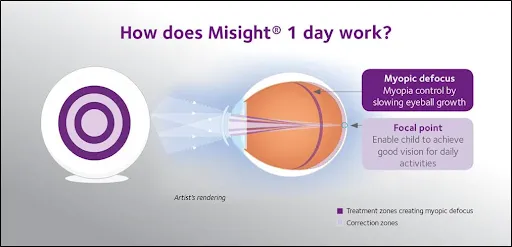
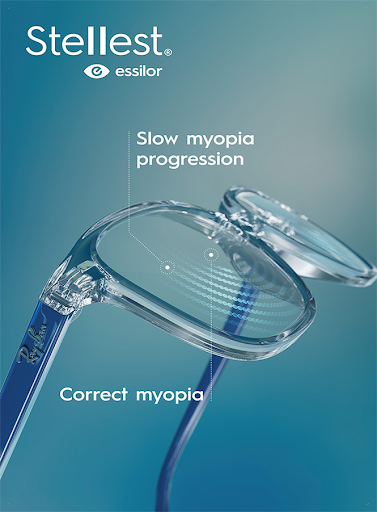
There are currently two main devices that we use in office to treat myopia in our younger patients, the CooperVision Misight 1day contact lenses and the Essilor Stellest lenses. Both devices utilize the ability to defocus the peripheral vision within your child’s eyes. During your child’s eye exam, and want to slow down progression that may be happening, bring up the following devices:
Misight contact lenses:
FDA-approved treatment for myopia management
Daily disposable spherical contact lenses
Slows myopic progression by 59% over 3 years
Designed to be exclusively worn by children
Utilizes layered peripheral defocus zones to slow eye elongation
Essilor Stellest Lens:
Single Vision glasses for full-time wear
Slows myopic progression by 67% over 2 years
Utilizes over 1,000 highly aspheric lenslets to focus light and slow eye elongation (H.A.L.T technology)
First FDA-approved ophthalmic glasses for myopia management
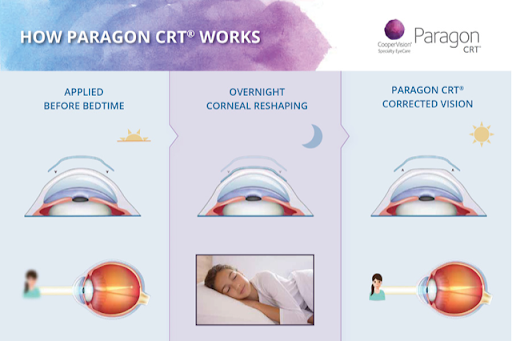
Orthokeratology lenses:
Custom-made, rigid gas permeable lenses to gently reshape cornea at night
Worn overnight
Provides clear vision without glasses or contact lenses during the day
FDA-approved lenses in office - Paragon CRT
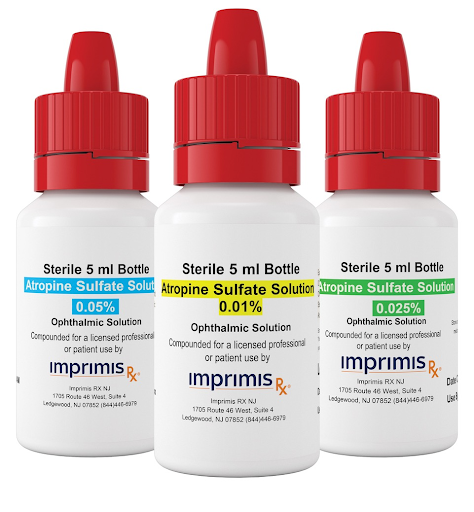
Low Dose Atropine Eyedrop:
Used off-label as a treatment for myopic progression
Generally applied once daily at night
May have side effects including slight blur at near and light sensitivity
Prescription required and sent to specialty pharmacies
What you can do about it
In children, myopia tends to progress or get worse throughout childhood, and higher levels of myopia are associated with higher eye disease risks (increased risk in glaucoma, retinal detachment, and myopic macular degeneration). If your child already wears glasses, you can do something to slow their vision from worsening. Myopia has a variety of causes with strong components coming from genetics and the environment your child grows in.
To prevent the progression of myopia, you can do the following:
Schedule your child’s eye exam for the year to make sure you are keeping up with your child’s eye health
Talk about devices that are able to slow progression with your child’s eye doctor
Be aware of poor performance in school, shortened attention span, and holding objects close to their face.
Spend more time outside, research in recent years has seen slowed progression of myopia with increased outside activity with increased sunlight and environments with focal point further than 20 feet.
Want to be clearer on your child’s vision? Call and schedule with Dr. Anne Valdez today! 725-220-2020
Quick Links

All Eye
Care Services

Keep
In Touch
MAP
© 2026 Optic Gallery Horizon Ridge. All Rights Reserved. Accessibility Statement - Privacy Policy - Sitemap
Powered by: 
